Back to portfolio A 0 → 1 case study · Conversational Scenario Interface

Bringing CSI from a hunch to a launched product.

The Conversational Scenario Interface didn't start as a spec — it started as ambiguity. This is the throughline: how a fuzzy idea became something people actually use, told one stage at a time. Open any screenshot to see it up close.

6
Stages, ideation → build
0 → 1
New product, new market
Lead
Product · Design · GTM
01

Ideation & Validation

csi.app/discovery/opportunity-canvas
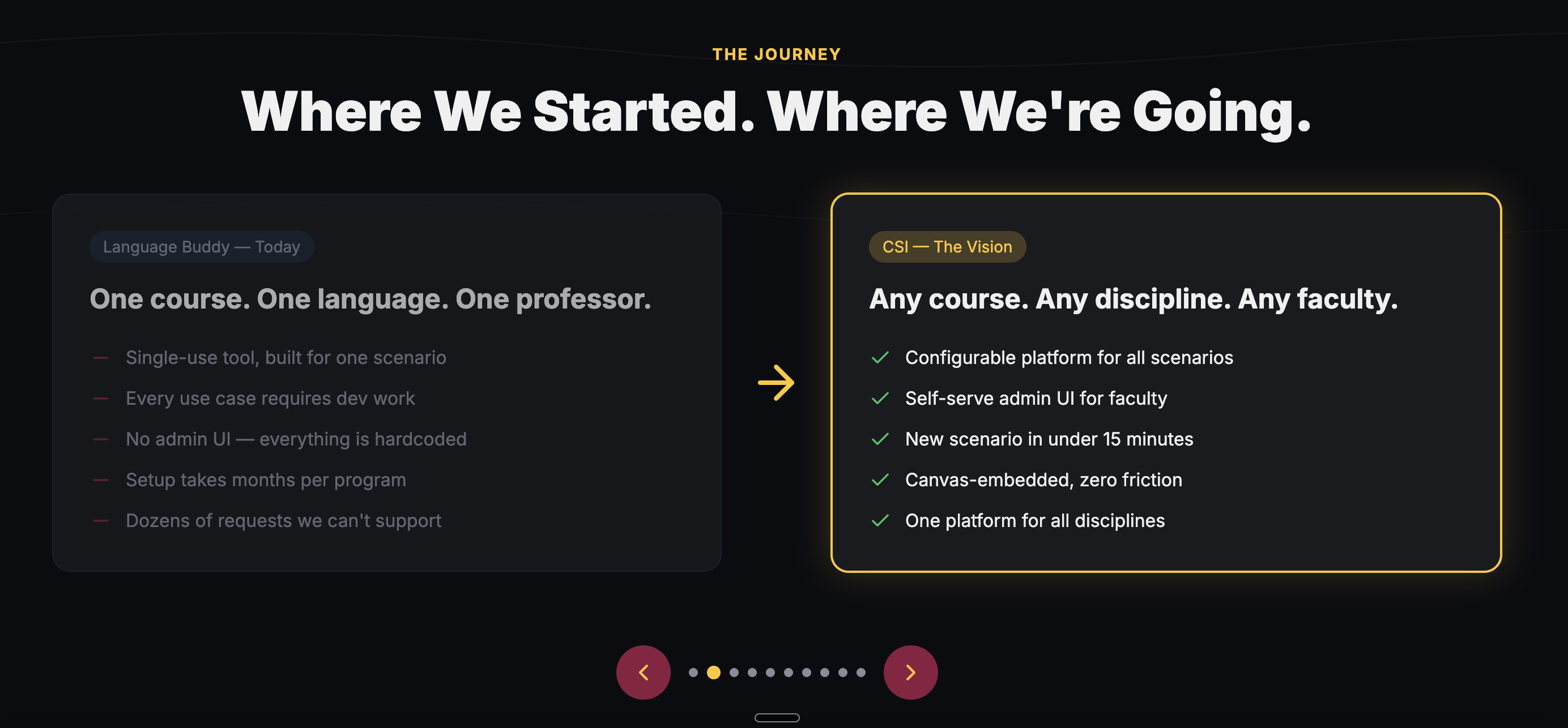
Screenshot CSI opportunity canvas — Where We Started, Where We're Going: Language Buddy today versus the CSI vision of a configurable platform for any course, discipline, and faculty.

CSI started as a messy problem space and a hunch. Before committing a single sprint, we pressure-tested the idea against real demand — framing the problem sharply enough that we could tell whether anyone actually needed it.

Artifacts & methods
Problem framing Opportunity sizing Stakeholder interviews Assumption mapping
Key decision

Validated desirability before feasibility — we killed three adjacent ideas to point CSI at one job-to-be-done. [Edit me.]
02

Early Prototyping

figma.com/proto/csi-v0-3
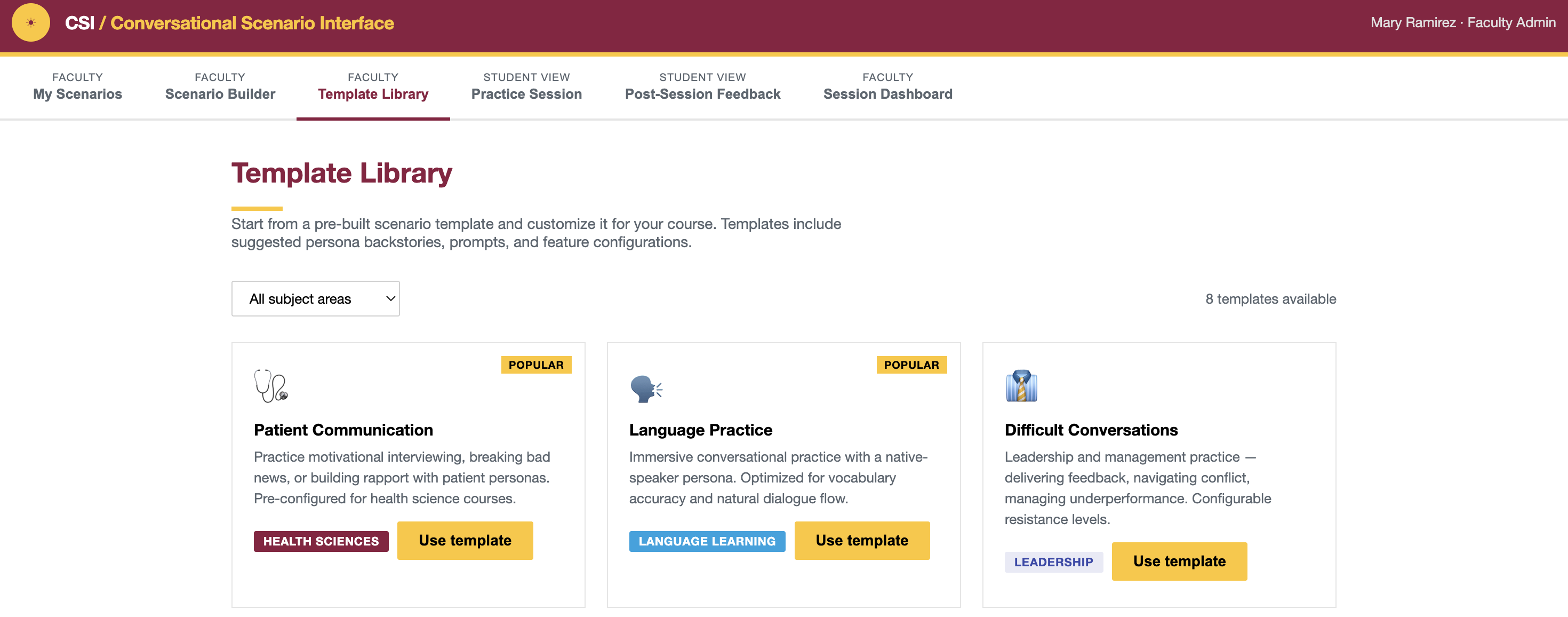
Screenshot CSI Template Library — faculty-facing screen with pre-built scenario templates (Patient Communication, Language Practice, Difficult Conversations) and a Use template action.

Low-fi to clickable, fast. Each prototype was a question, not a deliverable — built to be thrown away once it had taught us something. Speed of learning beat polish, every time.

Artifacts & methods
Figma prototypes Wireflows Concept testing Design tokens
Key decision

Shipped a rough clickable prototype in week one instead of polishing mocks — learning speed beat fidelity.

03

User Research

csi.app/research/synthesis
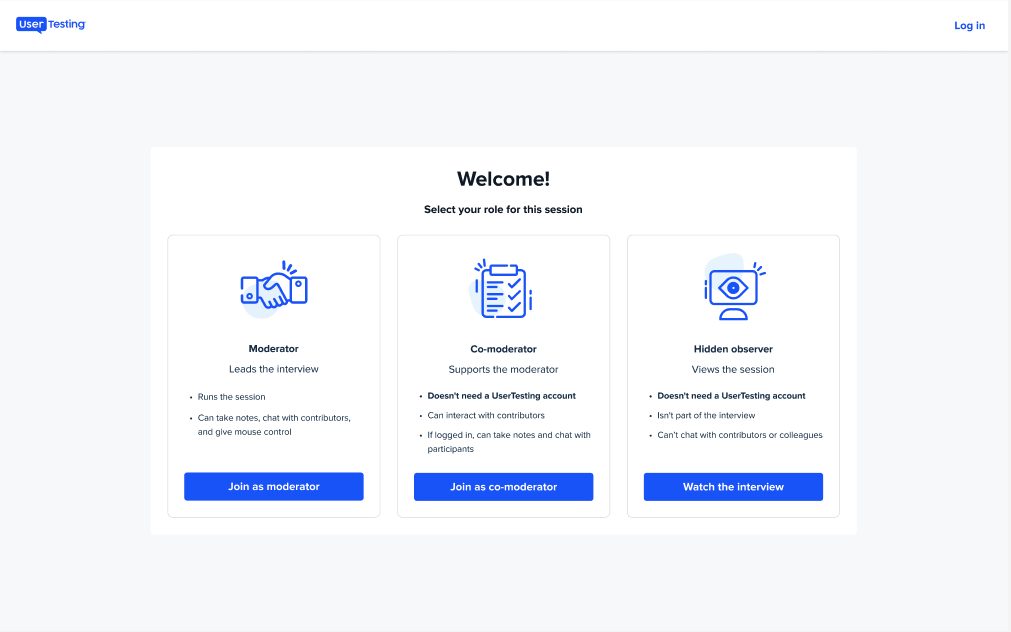
Screenshot UserTesting live conversation — Choose your role screen: Moderator, Co-moderator, or Hidden observer for a research session.

We went straight to the people who'd live with CSI every day — running interviews and usability sessions to separate what users say from what they do. The research became a reference the whole team returned to. 

Artifacts & methods
User interviews Diary study Jobs-to-be-done Affinity mapping
Key decision

Traded a broad survey for fewer, deeper interviews — depth over breadth surfaced the real friction.

04

GTM Strategy

csi.app/gtm/launch-plan
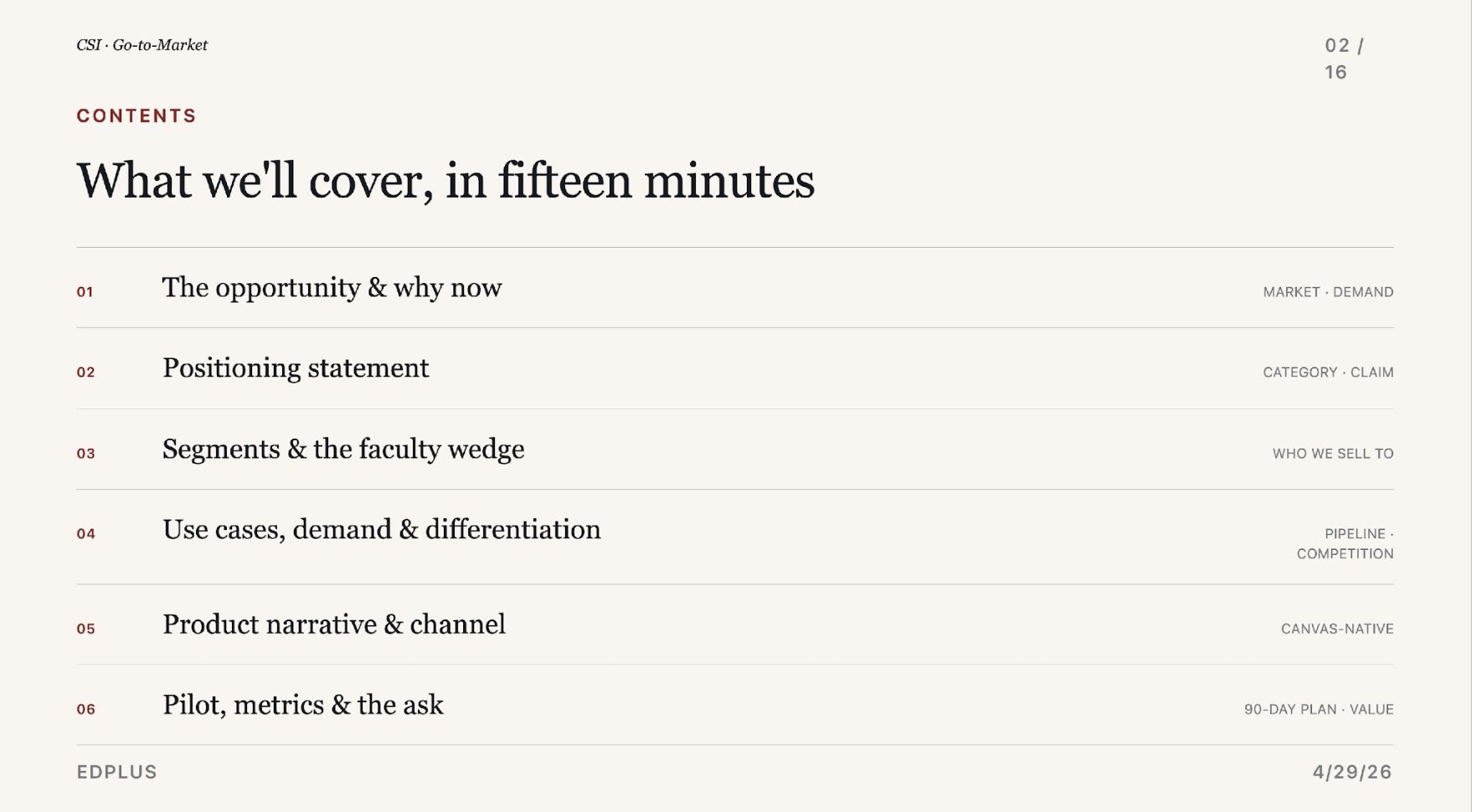
Screenshot CSI Go-to-Market deck — Contents slide: opportunity, positioning, segments, use cases, product narrative, and the pilot ask.

Before a line of production code, we mapped how CSI would reach users, who'd champion it, and how we'd know it was working. Strategy first meant the build had a destination.

Artifacts & methods
Positioning brief Launch tiers Success metrics Rollout plan
Key decision

Chose a phased rollout to a design-partner cohort over a big-bang launch — contained risk, compounded trust.

05

Design Review

csi.app/design/review-board
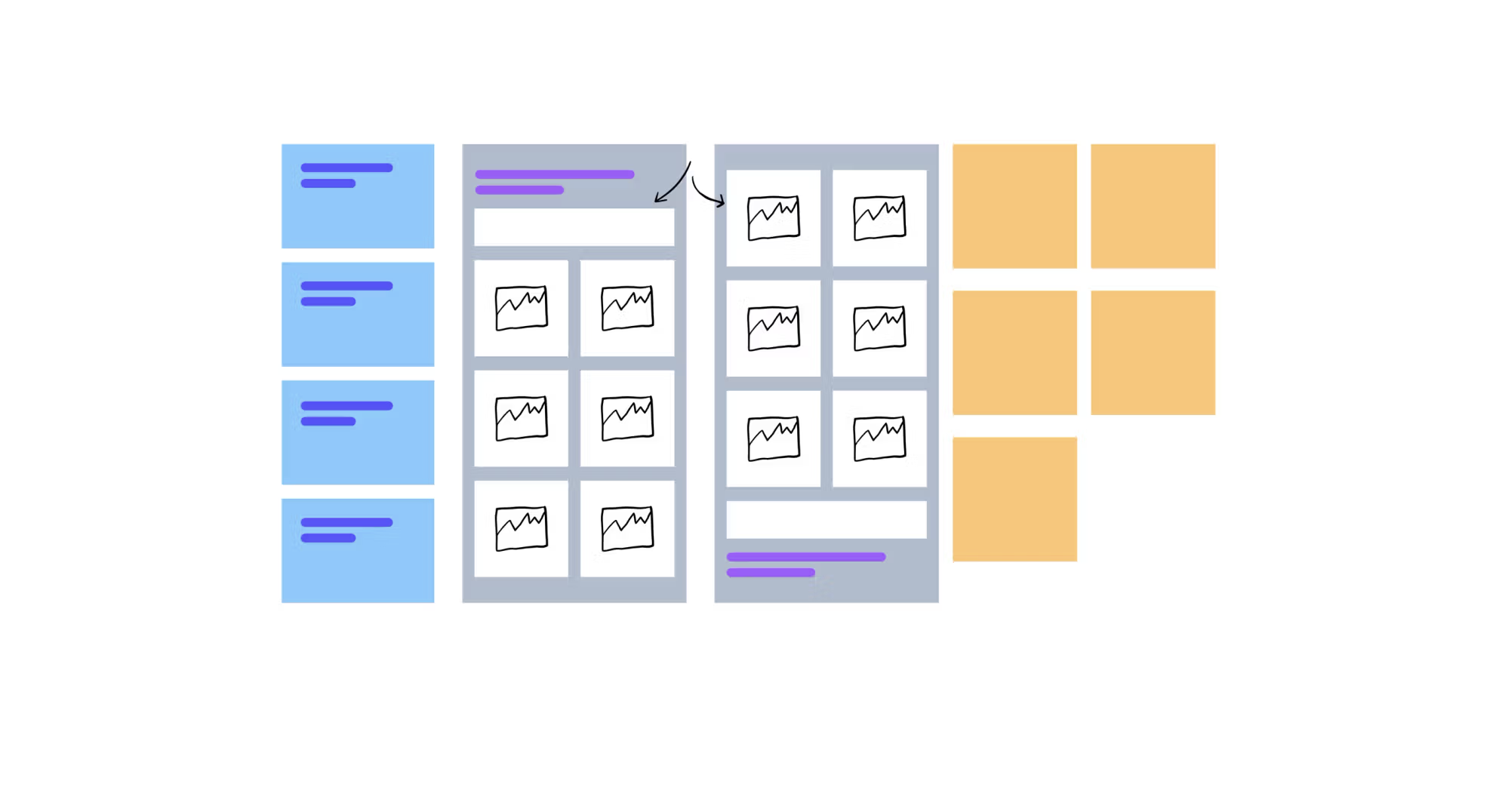
Screenshot CSI design review board — wireframe layouts and component variants laid out for critique against a rubric.

Cross-functional critique with a rubric, not vibes. Design reviews became the cornerstone for catching issues while they were still cheap to fix — and for keeping the bar consistent.

Artifacts & methods
Design critique Accessibility audit Heuristic eval Red-team review
Key decision

Adopted a written review rubric so feedback was about the work, not the loudest voice in the room.

06

Collaboration with Engineering

meet.csi.app/eng-standup
Photo Remote engineering standup — a video call with the cross-functional team on a laptop, design and engineering working from one shared backlog.

Design and engineering shared one backlog. We broke ambiguous goals into approachable, shippable deliverables and built CSI together — not over the wall.

Artifacts & methods
Spec handoff Story breakdown API contracts Pairing sessions
Key decision

Co-owned the spec with engineering instead of throwing it over the wall — scope creep dropped, velocity rose.

That's the throughline

Ambiguous to shipped. Every time.

CSI is one example of the pattern — take something fuzzy and overwhelming, and turn it into a product people use. Want to see the rest of the work?